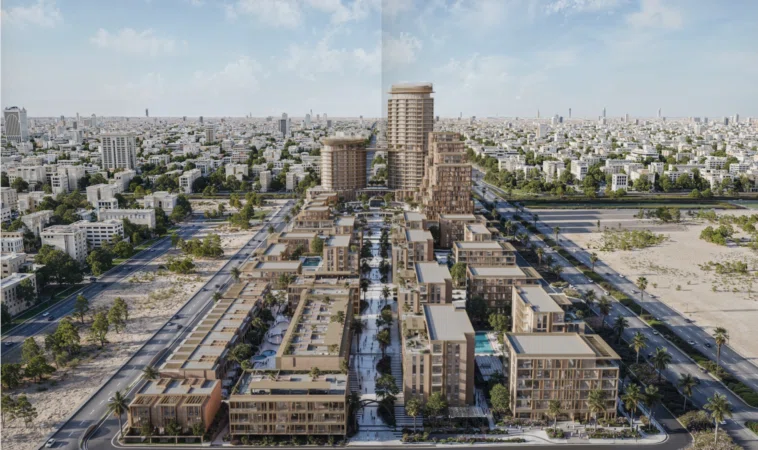
Object typeResidential
Completion date–
DeveloperOsus Real Estate
Total areafrom 65 m² to 280 m²
Down Payment5%

Saudi Arabia's Premium Residency program — often referred to as the "Saudi Green Card" — has undergone sweeping changes. Launched as part of the government's Vision 2030 economic diversification strategy, the program is designed to attract highly qualified professionals and investors to the Kingdom. Among its most in-demand tracks is the Real Estate Owner Residency — a specialized pathway that creates a direct legal link between the purchase of high-value residential property and the granting of long-term resident status, without the traditional requirement of a local employer-sponsor.
To qualify for residency under the Real Estate Owner track, a foreign investor must purchase completed residential property worth no less than SAR 4,000,000 (approximately $1,070,000 USD). Saudi law imposes strict compliance controls on qualifying assets. For a transaction to be eligible for Premium Residency, the property must meet the following criteria:
Foreign nationals may acquire properties under full freehold ownership across most of the country, including Riyadh, Jeddah, and Al Khobar. In the holy cities of Mecca and Medina, direct land purchase by foreign citizens is prohibited; however, the law permits the use of long-term usufruct rights (up to 99 years) for residency purposes.
The key advantage of Premium Residency over a standard work visa (Iqama) is complete independence from the sponsorship (Kafala) system. The cardholder becomes an autonomous legal entity within the Kingdom.
The program grants investors a comprehensive set of benefits:
The validity of this residency type is directly tied to asset ownership. The status is issued for 5 years and automatically renewed for equivalent periods as long as the investor retains ownership of the qualifying property.
The Premium Residency application process is fully digitized and handled through Saudi Arabia's unified government portal (pr.gov.sa). The procedure consists of five key stages:
1. Property search, verification, and purchase The investor selects a completed property valued at SAR 4M or above, commissions a valuation from a TAQEEM-certified specialist, and processes payments through the Saudi Ministry of Justice's government platforms to register ownership and obtain a Title Deed.
2. Preparation and legalization of personal documents A personal dossier is compiled for the primary applicant, including: a valid passport (minimum 6 months' validity), a criminal record clearance, a comprehensive medical certificate (issued no more than 6 months prior to submission, confirming the absence of infectious diseases), health insurance, and proof of financial solvency. All documents not in Arabic must be translated and officially certified (consular legalization or apostille).
3. Online application submission The applicant registers on the official Saudi Arabia Premium Residency Center (SAPRC) portal, completes the application form (including details on education, travel history, and income), uploads scanned copies of all documents including the Title Deed and TAQEEM report, and pays a registration fee of approximately $170 USD.
4. Review and verification (30–90 days) Saudi government authorities (including the Ministry of Interior) conduct a background check and legal review of the transaction. If required, the applicant may be invited to submit biometric data.
5. Final payment and card issuance Upon receiving pre-approval, the investor has 30 days to pay the fixed government processing fee, which for the real estate owner category amounts to SAR 4,000 (approximately $1,065 USD). Payment is made electronically through the applicant's account, after which both a digital and physical residency card are issued.
The Real Estate Owner Residency has proven to be an effective instrument for integrating Saudi Arabia into the global real estate market. By setting the entry threshold at SAR 4M, the Kingdom has created an offering comparable to premium programs in the UAE and European countries — backed by substantial domestic economic growth. For investors, this mechanism is not merely a way to purchase property, but a strategic tool for doing business, optimizing costs, and securing long-term stability in one of the most dynamically developing markets in the Middle East.